BlogPost#2: Thriller Genre
- Iris Li
- Nov 12, 2022
- 7 min read

Updated: Jun 12, 2023
A thriller is a genre of literature, film, and television whose primary feature is that it induces strong feelings of excitement, anxiety, tension, suspense, fear, and other similar emotions in its readers or viewers—in other words, media that thrills the audience.
Thrillers usually have a main character who is slowly isolated from the people they once trusted and relied on. The betrayal might thrust the protagonist into a new worldview. They have to work alone to prove their innocence or take down the people trying to kill them.
“The Thriller is the story form of our time because it concerns the individual coping with omnipresent and often difficult to even comprehend antagonism. The external becomes internal, forcing the protagonist to make fundamental choices to unleash critical gifts.” — Shawn Coyne
The sub-genres / hybrids of this genre:
Psychological thrillers, Political thrillers, Romantic thrillers, Supernatural/fantasy thrillers, Technothrillers, Noir thrillers, Suspense thrillers, Spy thrillers, Crime thrillers, etc.
List of Thriller genre films (chronologically):
The Lady From Shanghai (1947); Psycho (1960); The Silence of the Lambs (1991)

Se7en (1995); Memento (2000); Red Dragon (2002)

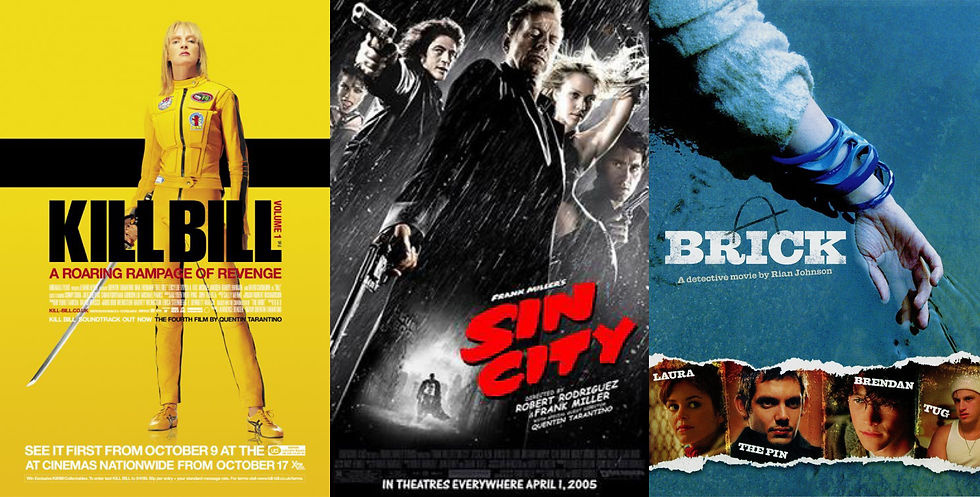
Kill Bill vol 1 (2003); Sin City (2005); Brick (2005)
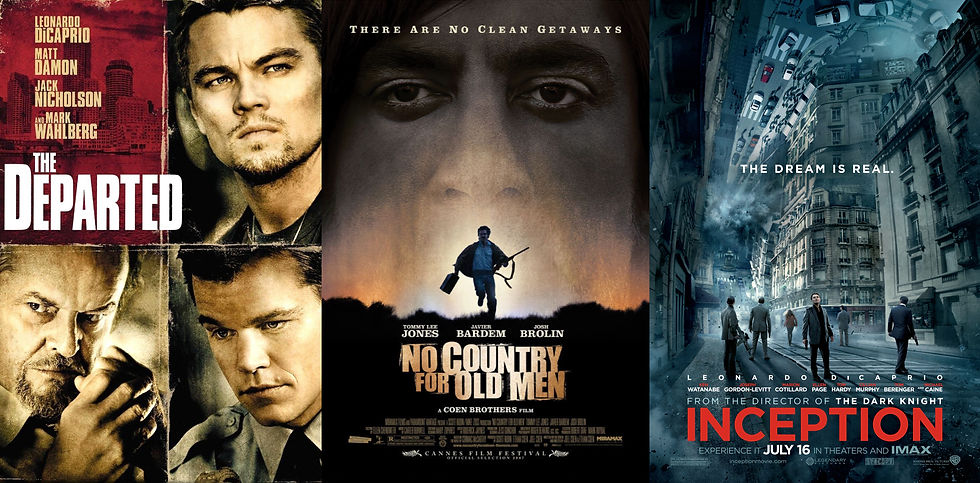
The departed (2006); No Country for Old Men (2007); Inception (2010)
Black Swan (2010); Get Out (2017); Parasite (2019)

How has the Thriller genre changed over time:
The earliest Thrillers
Thrillers' first appearance was during the 1920s, since the technology advanced enough to add the trademark music and quick shots to the film. Before then, technology and lazy editing made it difficult to do that.
One of the earliest thrillers, The Last Safety (1923), was actually a comedy but showed some aspects of a thriller, including a scene in which the main character had to climb a tall tower. He lost his footing a few times and put the audience on edge.
Thrillers in 70s and 80s
During this time, thrillers became more violent because of the prevalent gang violence in the 60s, and audiences expected more. The film Jaws was released in 1975, a gory and violent thriller based on a real shark attack in 1916.
Gangland violence inspired the film adaptation of the novel The Godfather, a violent film, and the filmmakers decided to include more violence in other genres, including thrillers.
Thrillers in 90s and the Present
Since then, Thriller has focused on mental disorders, obsession and violence, as well as the idea of an agent hunting down villains. One famous example is "Silence of the Lambs" (1991), in which an FBI agent has to talk to a cannibalistic psychologist to help track down a serial killer who is killing and flaying women.
Thrillers in Present and Now
Thrillers have evolved from some suspense in a film to violent, gory films with many themes of horror films. The difference is the huge plot twist that is a hallmark of thrillers. Thrillers have evolved from some suspense in a film to violent, gory films with many themes of horror films. The difference is the huge plot twist that is a hallmark of thrillers - from Psycho to Silence of the Lambs, to Shutter Island to The Butterfly Effect.
Alfred Hitchcock
The master of suspense, Hitchcock contributed to the genre and changed its landscape. He directed over 50 movies, each one a thriller and unique. He made advancements in technology, pioneering shots exaggerating anxiety and fear, as well as shot from the point of view of the characters. He pioneered the use of a MacGuffin, a plot device used as a goal for characters, often used in thriller films.
E.g. Psycho (1960)

Psycho brought a change to the thriller genre, being the first psychoanalytical thriller. It features a young woman leaving Phoenix and traveling to California and checking into the Bates Motel. She is murdered by a man with two personalities: His own, and that of his long-dead mother. The film has scenes in which Norman Bates is psychoanalyzed at the end of the movie, explaining the rest of the story, which is filled with twists and turns.

Dead Calm (1989)
This movie brought a new insight to the genre, dealing with the elements of possession. The main character must escape from the villain of the movie, a mass-murderer, who already has her in his grasp after murdering her husband.
Reference: https://prezi.com/hgvjhsucmoa5/evolution-of-the-thriller-genre/
Connection with Genre Theory by Steve Neale:
-Repetition of codes and conventions in Thriller films:
Feelings of excitement, anxiety, tension, suspense, fear, etc.
Difference of certain codes and conventions:
-The hybrids with other genres /the sub thriller genres: Psychological thrillers, Crime-thriller, etc.
-Who is the target audience for the genre?
Most young people, teenagers, including all genders.
-How/why does the genre appeal to audiences?
The experiences of suspense, tension, excitement, and other thrilling emotions intrigue young people. They craved and were satisfied by exploring uncertainties and unknown things.
-Does the genre exist in a range of medias as well as film?
Yes, many thriller films were the visual versions of thriller novels, the films are all based on the written texts. Thriller genre also appearing in video games. Some of directors also directed fantastic thriller TV-show and series.
Key codes and conventions of Thriller films:

Examples in Thriller films:
'Parasites'

I found a very interesting scene in "Parasite", While the male host and the female host lying on the sofa; Ki-jung, Ki-taek, and Ki-woo were hiding below the tea table. Just like what Hye-jin(the mother of Kim's family) said when the two hosts haven’t come back,:" They hide as the roaches in their basement. When they turn on the lights, the roaches will all run away and disappear under the cabinets." The audience could infer that the poor are just like the roaches in the kitchen and the rich as people. The director used roaches to represent the poor. (Representation- Stuart Hall)

The director used the number of items to represent the smell. The socks and toilet… connote that the poor have a smell, and only the rich can smell that, the poor cannot. Two scenes could show the situation of the Kim family. The upward slope and downstairs road connote that when Kim get into Park’s family to have a job, their life changed to a higher standard, however, when after the storm, not only did their basement(home) get worse but also their life. The right-to-left movement also suggests failure. (Semiotic- Roland Barthes)
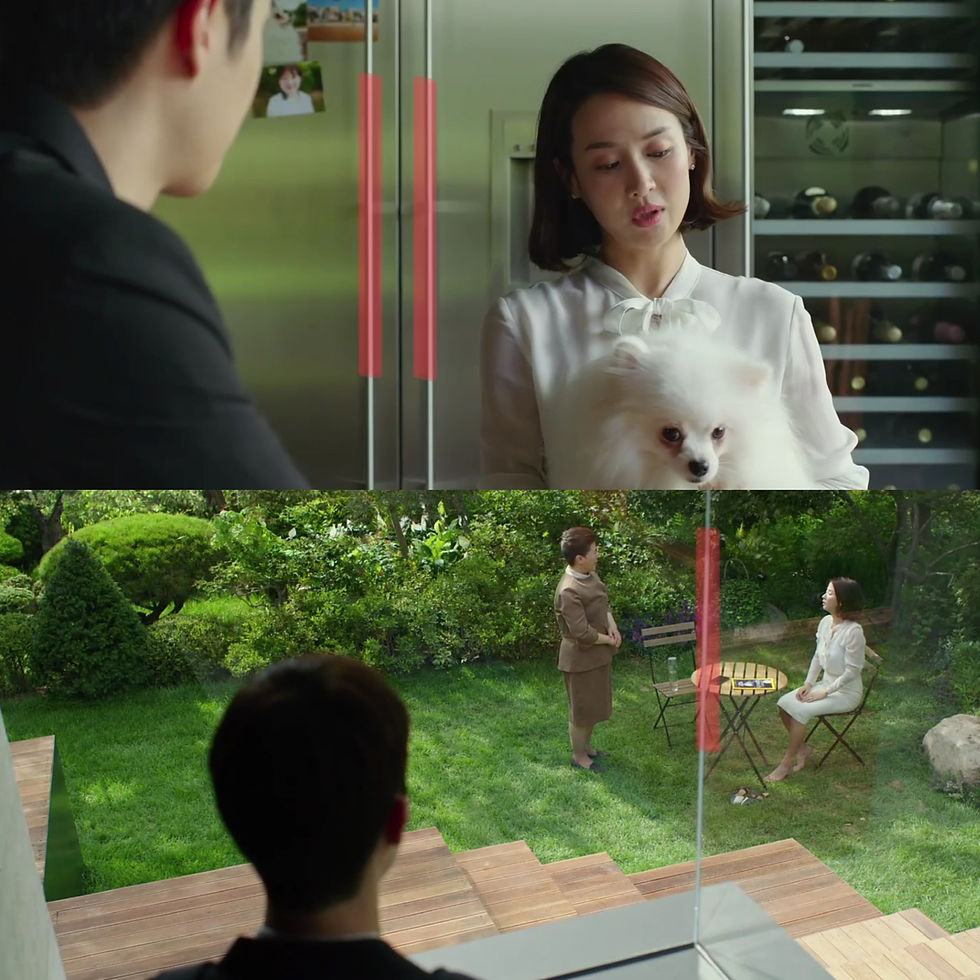
The movie follows structuralism(Claude Lévi-Strauss), the binary opposition (the use of paired elements within a narrative that provide contrast): Poor and rich. The director has perfectly used lines and boundaries to convey the distance between poor and rich, as they shouldn’t be together. Poor could not try to break the boundaries. The audience could see that whenever the Two host the Kim Family, they always stay apart and never cross the line.
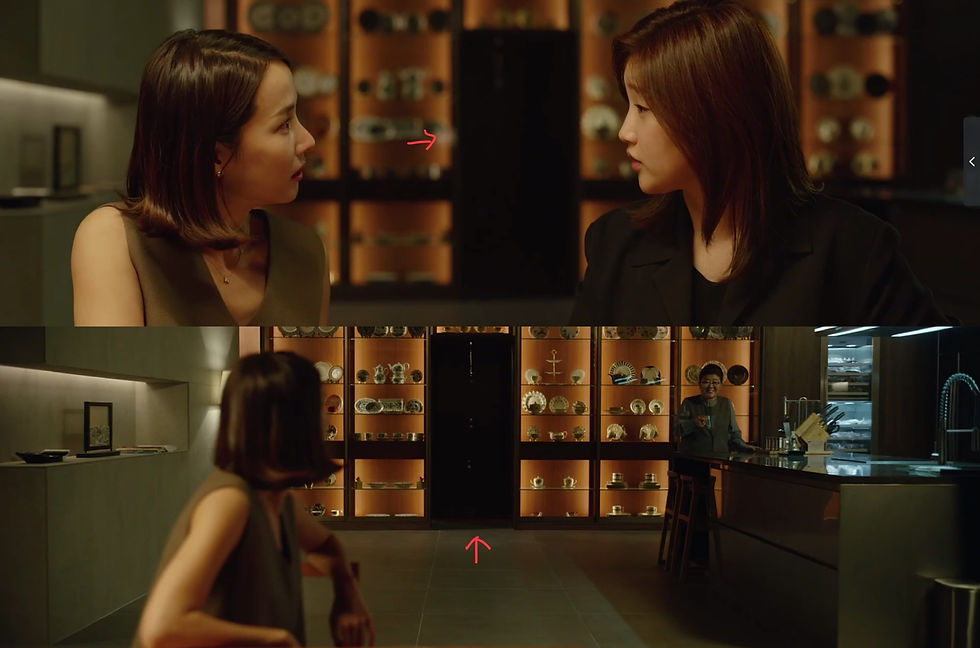
Within the movie, a mysterious background has shown to the audience several times. A dark entrance to the house's basement. every time the characters have a conversation, the repeating background intrigues the audience and set a panic and thrill tone.
The symbols in Parasite
John Truby: "Symbols give you hidden language that emotionally sways the audience. A symbol is a highly concentrated meaning."
Motifs: A literal technique that consists of a repeated element that has the symbolic significance of literary work.
The viewing stone: Ki-woo’s aspiration for wealth, the remnant of Min.
Ki-woo decided to use his "dream", the viewing stone to kill the people that threaten his dream, however, he has been smashed by the previous housekeeper’s husband using the stone, connotes that he can not make his dream to be real, he does not belong to wealth and the house.
Smell: inescapable poverty- will stay along with Kims, which means they can never reach the next class status, they will not get rid of it.
'Black Swan'
In this film, the mirror effects appeared several times in different situation.
Mirror, could connote the realities, the deportment, or the inner-self of the character.

The piece of glass. The particularity of glass lies in the fact that it can form the overlap of double images under the right light conditions, both the mirror and the real image of the scene behind glass. The glass of the subway station plays a huge role. First of all, the glass reflects Nina's own shadow. As the train pulls into the platform, the real image of the platform overlaps with the human figure, rolling past, and the glass imaging features have been shown here. Next, Lily appears for the first time in another compartment, which is expressed in the form of Nina looking through the glass, thus blurring the difference between the mirror image and the real image. From the very beginning of lily's appearance, the mirror image strengthens their twin relationship.
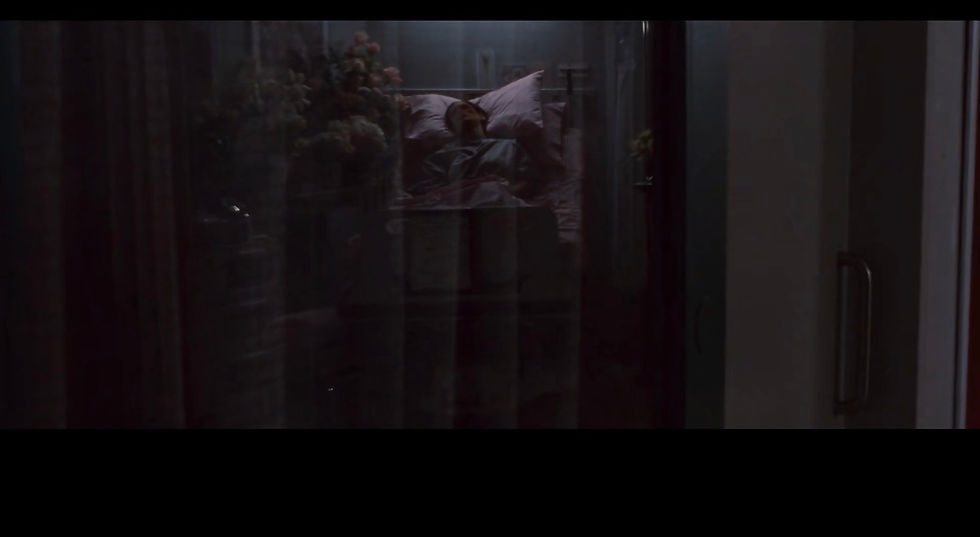
Another glass image is in the hospital, Nina goes to visit the former lead actor Beth, who has a car accident, and there is a close correspondence between Nina and Beth. Beth's paranoia and madness also become Nina's future fate.

Then there's the water. In the bathroom, Nina sinks her head under the water. This is one of the earliest moments of fantasy in the film. Water surface imaging is extremely unstable, and a ripple can shatter the image. When Nina starts to panic, the mirror image also disappears.

Moreover, the mirror images created by the different shapes of mirrors. The first kind, the mirror with seams, appears in Nina's home and rehearsal hall. The seams on the mirror will make the true mirror image change, thus making sense. The black frame in the middle of the two mirrors covers the back side of Nina's body and the front side of Lily's body, making them spliced into one person. In line with the meaning of mirror image, the two people here are actually the same person, and lily is Nina's illusion in this scene.
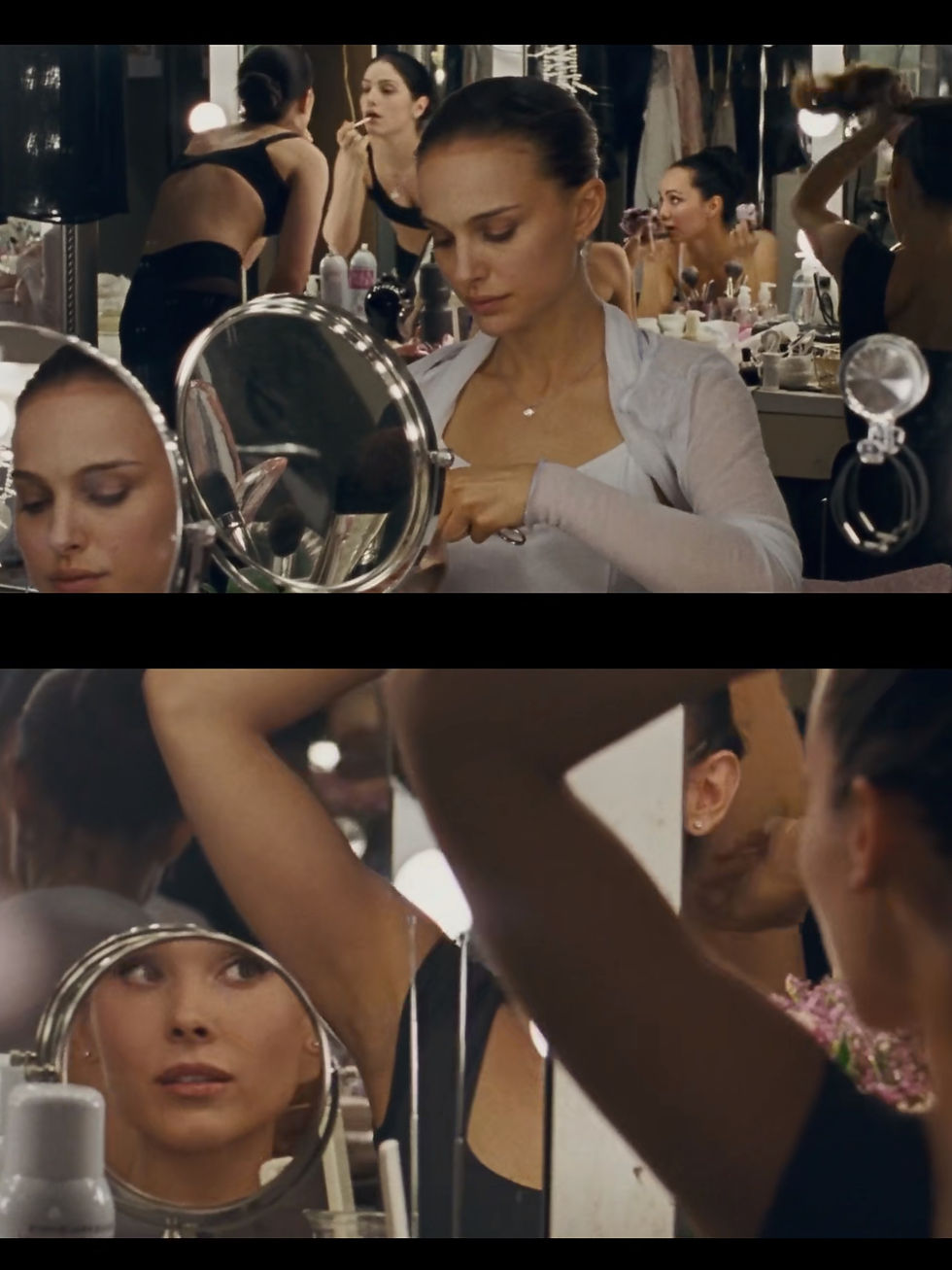
Second, a combination of mirrors. Under proper placement and Angle, multiple dopplers can be reflected. For example, in the dressing room scene, Nina and the other actors discuss the outdated Beth. Faces always appear on the small mirror on the desktop, so as to attract the audience's attention, highlight the difference between Nina and the other people's expressions, and reflect the personality differences.
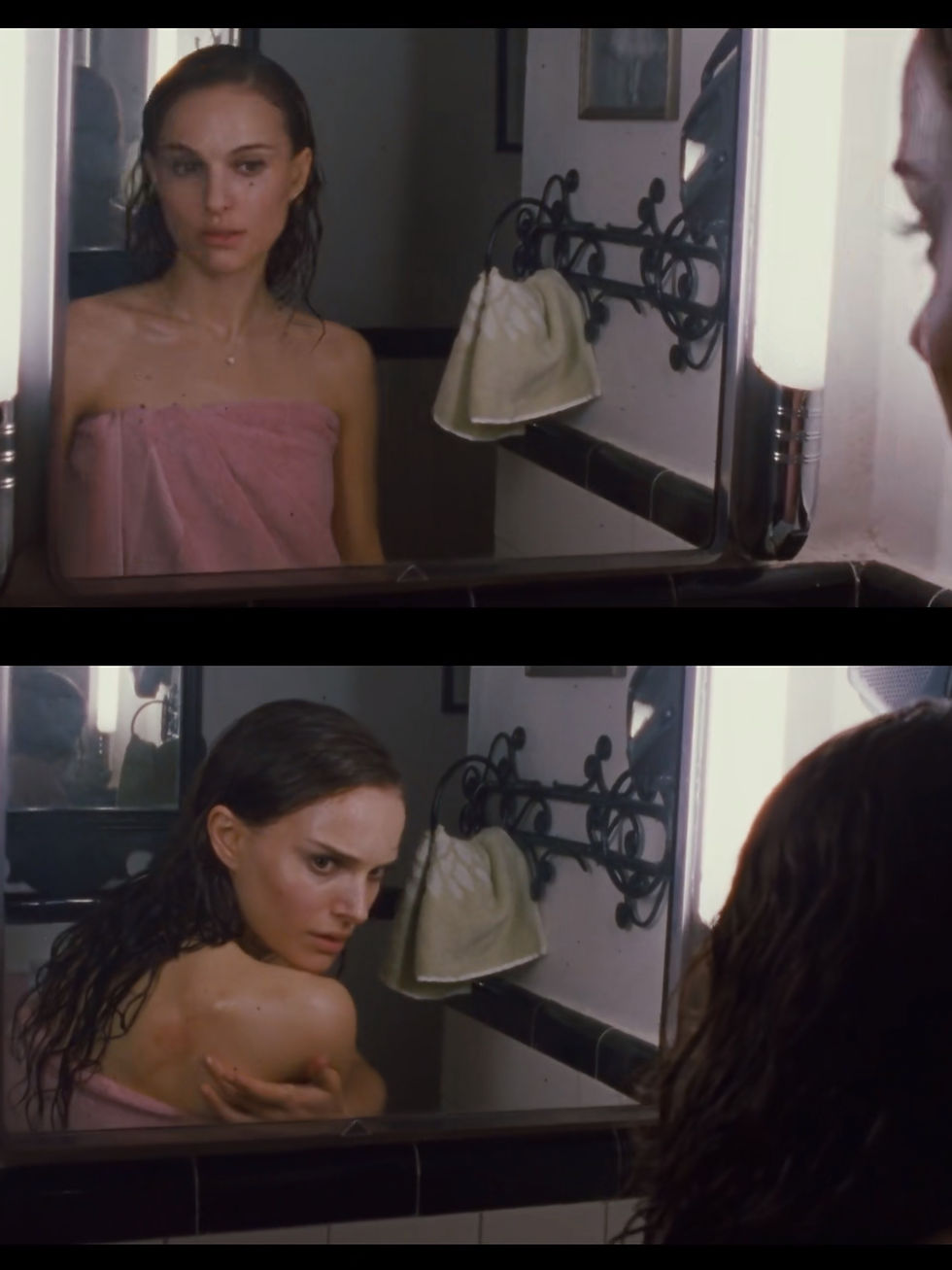
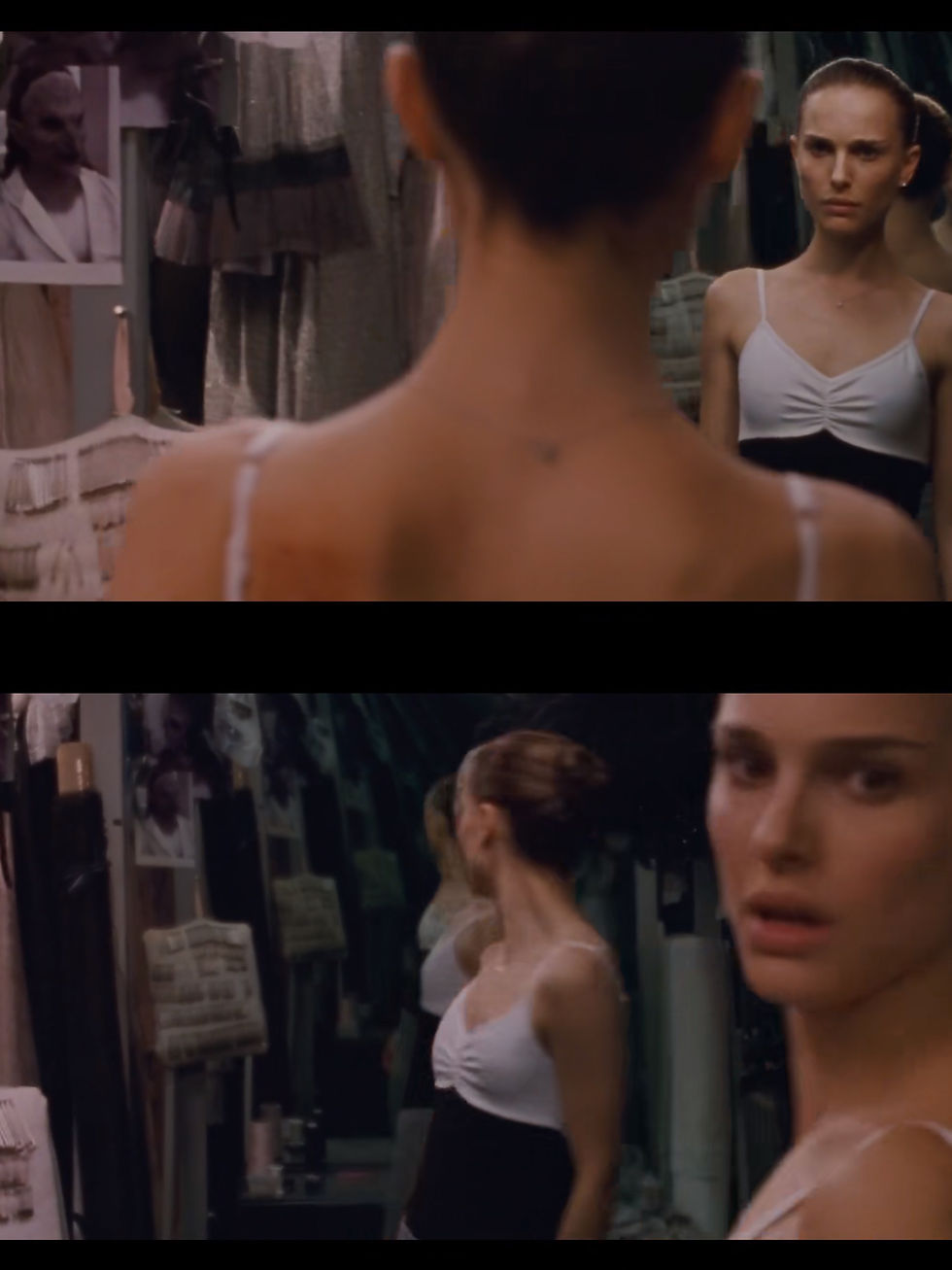
Extreme mirror combination. In Nina's own bathroom, an extremely private space, the exaggerated visual effect of infinite overlapping images can be produced. It is in this space that Nina has frequent hallucinations. The other time is relative to the mirror, appearing in the place where Nina customizes her performance costume, presenting the front of mirror Yuan to the audience.

It is in the 66th minute of the film that the first close-up of multiple mirrors is emphasized. With the accumulation of contradictions and the deepening of Nina's illusion, the director uses the increasingly exaggerated mirror effect. Simulates the character's increasingly out of control psychological state.



Comments